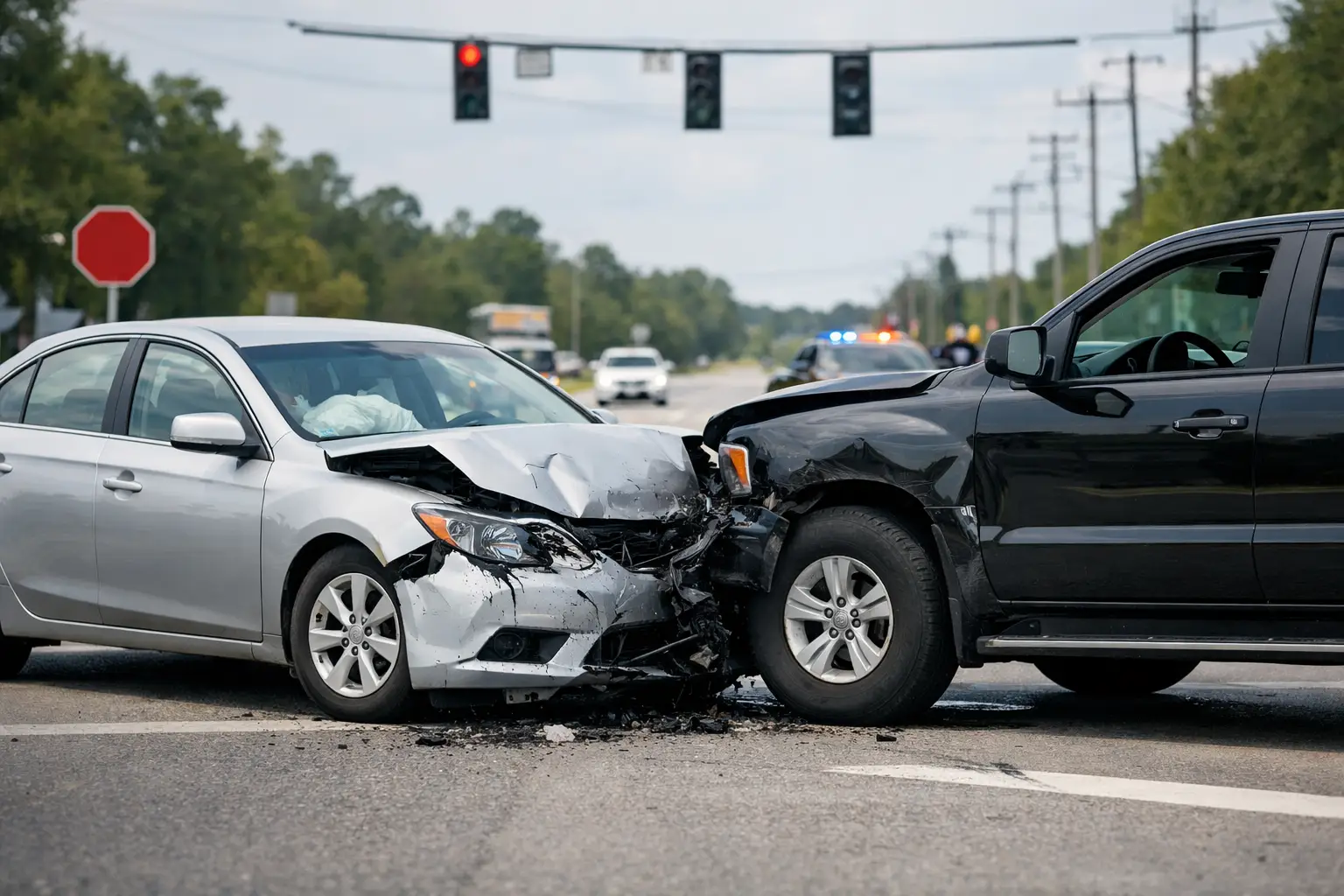
A crash in an intersection can leave two drivers pointing at the same traffic light and telling very different stories. One driver says the light was green. The other says they had the right of way. Under intersection accident fault rules, the answer rarely rests on who speaks first or who sounds most certain to an insurance adjuster. It rests on evidence, traffic laws, witness accounts, and the facts that can still be preserved after the wreck.
For an injured driver or passenger, fault matters because it can affect the compensation available for medical bills, lost income, vehicle damage, pain, and other losses. It also matters because insurance companies may use uncertainty at an intersection to pressure families into accepting less than the claim may be worth.
How Intersection Accident Fault Rules Work
Intersection collisions are commonly caused by a failure to yield, running a red light or stop sign, unsafe turns, distracted driving, speeding, or a driver who misjudged another vehicle’s distance. The person who violated a traffic rule may be responsible, but a citation alone does not always decide a civil injury claim.
Police officers often arrive after the impact, not before it. Their crash report can be meaningful evidence, yet the full picture may require photographs, video, vehicle damage analysis, witness interviews, cell phone records, and testimony from the people involved. A driver can receive no ticket and still be found at fault. Likewise, a driver who receives a citation may have defenses depending on what actually happened.
Most intersection cases turn on one question: who had the legal duty to yield at that moment? Traffic signals and signs are part of the answer, but drivers also have a continuing duty to use reasonable care. Having a green light does not give someone permission to speed through a congested intersection without watching for hazards. A driver making a permitted turn must still check for oncoming traffic, pedestrians, and vehicles already in the intersection.
Left-Turn Crashes
A driver turning left usually must yield to oncoming traffic that is close enough to create an immediate hazard. That rule is why left-turn collisions often begin with a presumption that the turning driver caused the crash.
But it depends on the evidence. An oncoming driver who was speeding, ran a red light, drove without headlights at night, or entered after the signal changed may share responsibility or may be the primary at-fault party. The impact location, the timing of the light cycle, surveillance footage, and neutral witnesses can become central to the claim.
Red Lights, Stop Signs, and Yellow Lights
A driver facing a red light or stop sign must stop and yield before entering the intersection. When a vehicle enters against a red light and strikes another vehicle, fault may appear straightforward. Still, insurers may argue over whether the light was red, when it changed, or whether the other driver could have avoided the collision.
Yellow-light cases can be more complicated. A yellow light warns that the signal is changing. It does not automatically make a driver negligent for entering the intersection, but a driver who accelerates recklessly to beat the light may be held responsible. Video from nearby businesses, dash cameras, or traffic cameras can disappear quickly, which is one reason early action can matter.
Four-Way Stops and Uncontrolled Intersections
At a four-way stop, the first vehicle to arrive generally has the right to proceed first. If vehicles arrive at nearly the same time, the driver on the left generally yields to the driver on the right. These rules sound simple until both drivers claim they stopped first.
At an uncontrolled intersection, the rules may depend on the road design and state law. In many situations, a driver must yield to a vehicle already in the intersection or approaching from the right. Visibility, speed, parked vehicles, and obscured signs can all affect the analysis.
Shared Fault Can Change a Recovery
More than one person can contribute to an intersection crash. A driver may have failed to yield, while the other driver was speeding or looking at a phone. A passenger may be injured even though the drivers dispute fault. A commercial vehicle, road defect, or malfunctioning signal may also be part of the case.
Louisiana and Mississippi generally apply pure comparative fault principles. That means an injured person’s compensation can be reduced by their percentage of fault, rather than automatically barred because they were partly responsible. For example, a person with $100,000 in proven damages who is found 20% at fault could recover $80,000 from the responsible party or parties, subject to the facts and available insurance.
Arkansas handles comparative fault differently. If an injured person is found to be 50% or more at fault, recovery may be barred. If their share of fault is less than the fault assigned to the other side, damages may be reduced by that percentage. These differences are significant for families in Monroe, Bastrop, and communities near state lines, where an out-of-state crash or driver can complicate the claim.
Fault percentages are not numbers an insurance company gets to invent. They should be supported by credible evidence. Yet an adjuster may raise shared fault early because it reduces what the insurer may have to pay. A careful investigation helps prevent a one-sided version of events from becoming the accepted story.
Evidence That Can Protect Your Claim
After an intersection collision, physical evidence can change quickly. Vehicles are repaired or declared a total loss. Road conditions change. Nearby camera footage may be recorded over. Witnesses may become difficult to locate.
If you can do so safely, take photographs of the vehicles, their positions, traffic signals, signs, skid marks, debris, weather conditions, and visible injuries. Get names and contact information from witnesses, and ask responding officers how to obtain the crash report. Seek medical care promptly, both for your health and because delayed treatment can give insurers an argument that injuries were unrelated or less serious.
Do not repair, sell, or dispose of your vehicle before it has been properly documented when there are serious injuries or a dispute about fault. The crush patterns and points of impact may help explain vehicle movement and the force of the collision. Keep records of medical appointments, missed work, prescriptions, and the ways the injury has affected daily life.
Avoid posting details, photos, or opinions about the crash on social media. A casual statement such as “I never saw them” can be taken out of context and used against you. The same caution applies to recorded statements for another driver’s insurer. You can provide basic facts, but you do not have to accept blame or guess about speed, signal timing, or injuries while you are still shaken and receiving medical care.
When an Insurer Says You Caused the Crash
Insurance companies often move fast after intersection crashes. An early settlement offer may arrive before you know whether you need continued treatment, surgery, rehabilitation, or time away from work. Once a claim is settled, it is usually difficult or impossible to seek more money if the injuries prove more serious than expected.
A fair evaluation should account for more than the repair bill or an emergency room visit. It may include future medical needs, lost earning capacity, physical pain, emotional harm, disability, and the impact on family life. In a fatal intersection collision, surviving family members may face additional losses that deserve careful consideration.
Downs Law Firm helps injured people and grieving families examine what happened, preserve available evidence, and stand up to insurance company pressure. There are no upfront legal fees for injury cases, and fees are owed only after a financial recovery is secured.
After an intersection crash, protect your health first, preserve what you can, and resist the urge to decide fault based on an insurer’s first call. A clear account of the facts, supported by timely evidence, can give your family a stronger footing when recovery is on the line.