
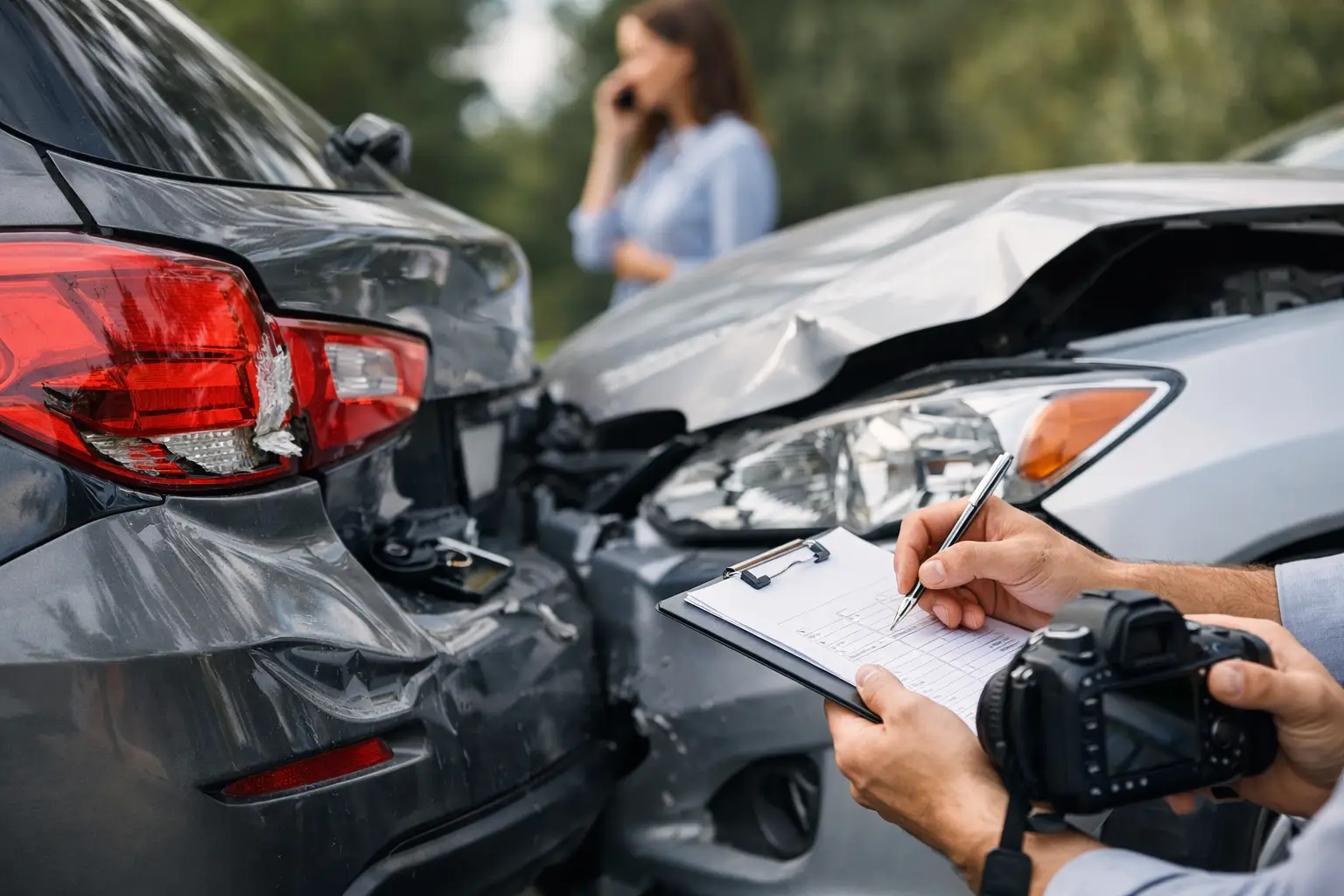
The moments after a rear-end collision can feel like a blur: the impact, the pain, the calls to family, and the pressure to get home or get back to work. But rear end accident evidence begins disappearing almost immediately. Vehicles are repaired, camera footage is recorded over, witnesses forget details, and insurance companies start building their version of events early.
For an injured driver or passenger, evidence is not just paperwork. It can show how the crash happened, document the force of the impact, connect an injury to the collision, and push back when an insurer tries to minimize what your family has lost.
Why rear-end crashes still require proof
People often assume the rear driver is automatically responsible. In many cases, a driver who strikes the vehicle ahead failed to leave enough following distance, was distracted, drove too fast for conditions, or did not react in time. But an assumption is not the same thing as proof.
The other driver may claim you stopped suddenly, had broken brake lights, changed lanes without warning, or reversed. An insurer may question whether the collision was forceful enough to cause neck, back, head, or spinal injuries. Those arguments can become even more serious when a crash involves multiple vehicles, poor weather, a commercial truck, or a preexisting medical condition.
Strong evidence helps establish liability and damages separately. Liability evidence addresses who caused the crash. Damages evidence shows what the crash has cost you physically, financially, and personally. Both matter in a claim.
Rear end accident evidence to preserve right away
If you are physically able to do so, use your phone to document the scene before the vehicles are moved. Take wide photos that show the roadway, traffic signals, lane markings, weather, and where each vehicle came to rest. Then take closer photos of damage, debris, skid marks, broken glass, deployed airbags, and visible injuries.
Photograph the rear of your vehicle and the front of the vehicle that hit you from several angles. What looks like minor bumper damage in one picture may reveal crushed components, misaligned panels, or paint transfer in another. Do not rely solely on an insurance adjuster’s photographs.
The police report is also useful, particularly when it identifies the drivers, witnesses, location, apparent vehicle damage, and officer observations. Still, a report is only one part of the picture. Officers may arrive after the vehicles have been moved, and they may not see every fact that later becomes important.
Witness information can make a difference
An independent witness can be powerful when drivers give conflicting accounts. Ask for names and contact information from anyone who saw the crash, including drivers who stopped, nearby pedestrians, employees at surrounding businesses, or people in adjacent vehicles.
A witness does not need to have seen every second of the collision to help. Someone may have noticed the other driver looking down at a phone, speeding through traffic, following too closely, or failing to brake. Write down what the person says while the memory is fresh, but avoid coaching or arguing with anyone at the scene.
Video may be gone sooner than you think
Dash cameras, doorbell cameras, traffic cameras, and cameras at gas stations or businesses can capture moments that a police report cannot. Footage may show traffic movement, brake lights, lane positions, or the force of impact. A nearby camera may also reveal whether the other driver was distracted before the crash.
Many recording systems automatically erase footage after days or weeks. Prompt action matters. A lawyer can send preservation notices to businesses, vehicle owners, and other parties that may possess relevant recordings or data.
The vehicles themselves may hold critical proof
Do not rush to repair, sell, or dispose of your vehicle without first considering its evidentiary value. The damage pattern can help explain the direction and severity of the impact. In a disputed case, an inspection may be needed before repairs are made.
Modern vehicles can also retain electronic data. Depending on the vehicle and crash, the event data recorder may contain information such as speed, braking, steering input, seat belt use, throttle position, and airbag deployment. This information has limits and must be interpreted carefully, but it can support or challenge a driver’s account.
When an 18-wheeler or other commercial vehicle causes a rear-end crash, the evidence can be broader. Electronic logging records, onboard video, dispatch communications, inspection records, maintenance documents, and company safety policies may all become relevant. Trucking companies and their insurers often begin investigating immediately. Injured people deserve the same urgency in protecting proof.
Your medical records tell part of the story
Seek medical attention promptly when you have pain, dizziness, numbness, headaches, confusion, or other symptoms after a collision. Adrenaline can mask injuries at the scene, and some conditions become more noticeable over the following hours or days.
Tell your medical providers how the crash occurred and describe every symptom honestly. Do not minimize pain because you are worried about work, family obligations, or the cost of treatment. Medical records create a timeline that may connect your injuries to the wreck and document the care you need.
Follow recommended treatment when you can, keep appointments, and retain bills, prescriptions, therapy records, work restrictions, and receipts for crash-related expenses. If a treatment plan is difficult to follow because of transportation, cost, or scheduling, communicate that problem to your provider. Gaps in care are not always fatal to a claim, but insurers often use them to argue that injuries were not serious.
A simple daily journal can add context that medical charts do not always capture. Note missed work, interrupted sleep, trouble lifting a child, inability to drive, medication side effects, and activities you can no longer manage as before. Be accurate and specific. This is about documenting your real life, not overstating it.
Be careful with insurance company requests
After a rear-end collision, an adjuster may sound sympathetic and ask for a quick recorded statement, broad medical authorizations, or access to your vehicle. Their goal is often to resolve the claim for less than its full value or find information to use against you later.
You can report the crash and provide basic facts, but be cautious about discussing fault, your diagnosis, or whether you are fully recovered. Avoid guessing about speed, distance, or the extent of an injury. You may not know those answers yet.
Do not post crash details, photographs, physical activities, or comments about your health on social media. A single image without context can be used to create a misleading impression about your condition.
The rules affecting fault, insurance coverage, deadlines, and available compensation can differ in Louisiana, Arkansas, and Mississippi. The facts of your case also matter. A prompt investigation gives your family more options before key evidence disappears.
How a thorough investigation protects a claim
A serious rear-end claim may require more than gathering a report and medical bills. It may involve locating witnesses, obtaining video, preserving electronic vehicle data, reviewing damage estimates, examining the roadway, and identifying every source of insurance coverage.
At Downs Law Firm, our family stands beside injured people facing insurance-company pressure. We investigate with the understanding that a fast offer may arrive long before the full medical and financial consequences of a crash are clear. There are no upfront legal fees, and a fee is owed only after a financial recovery is secured.
You do not need to have every document in hand before asking for help. Save what you have, avoid signing away rights in a hurry, and get guidance while the evidence is still there. The steps taken in the first days after a rear-end crash can help protect the care, stability, and recovery your family needs.