The hours after a crash can blur together: the sound of impact, the flashing lights, a trip to the emergency room, and calls from insurance adjusters. In the middle of it all, the car accident police report may seem like just another piece of paperwork. It is often much more than that. It can preserve early observations about how the collision happened, identify the people and vehicles involved, and point to evidence that may later disappear.
For an injured driver, passenger, or grieving family, a report can provide a useful starting point. But it is not the final word on fault, and it should not be treated as one. Understanding what the report does – and what it does not do – can help protect your claim before an insurance company tries to define the story for you.
What Is in a Car Accident Police Report?
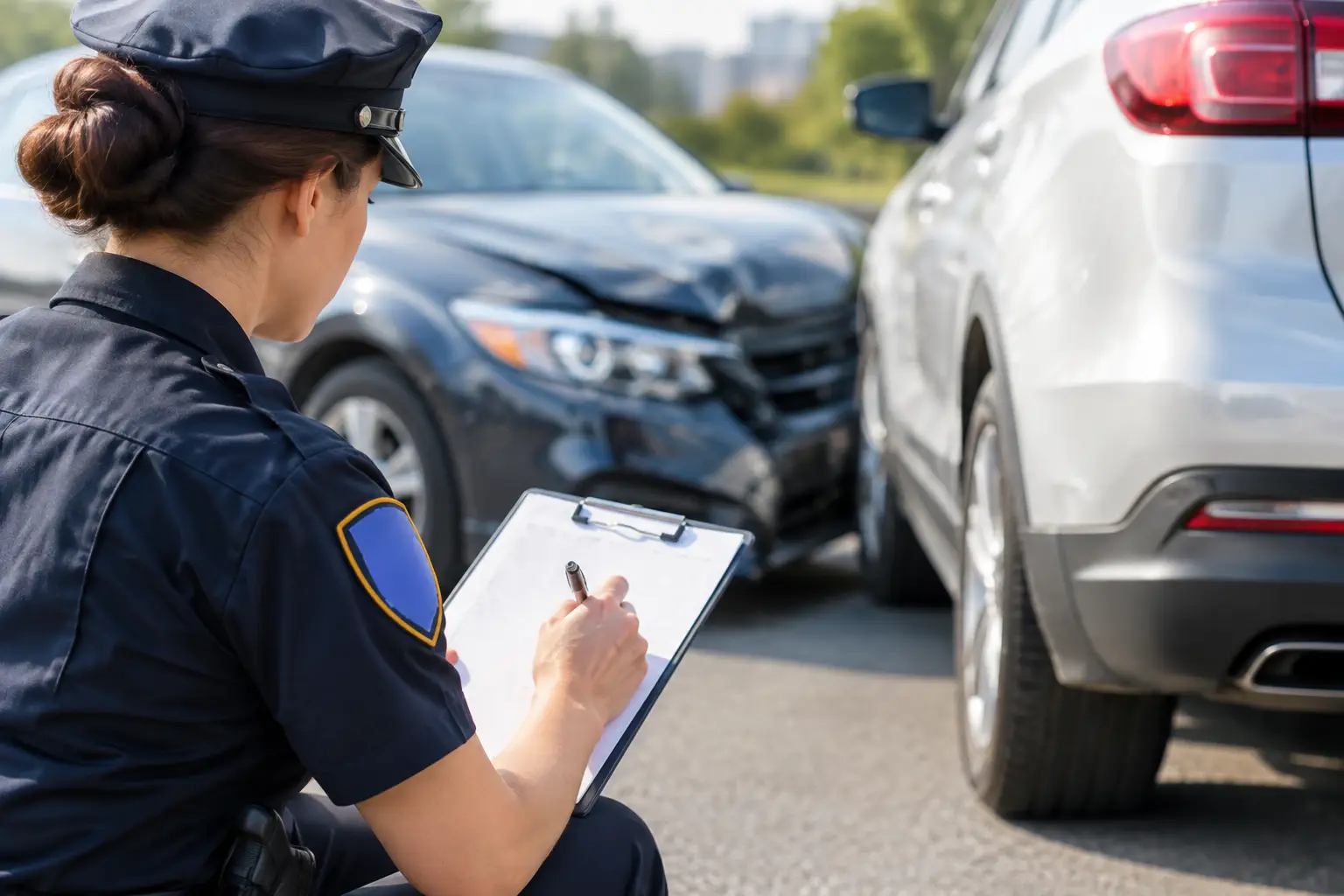
When law enforcement responds to a collision, the responding officer typically prepares a written crash report. In Louisiana, this may be completed by local police, a sheriff’s office, or the Louisiana State Police, depending on where the wreck occurred. The report generally records information gathered at the scene while vehicles, roadway conditions, witnesses, and physical evidence are still available.
Most reports include the date, time, and location of the crash; driver and passenger information; insurance information; vehicle descriptions; and a diagram showing the officer’s understanding of the collision. They may also identify witnesses, describe visible vehicle damage, note weather or road conditions, and state whether a citation was issued.
The narrative section deserves close attention. This is where the officer may summarize what each driver said, what witnesses reported, and why the officer believes the crash occurred. A rear-end crash, for example, may be described as following too closely or failing to stop. At an intersection, the report may discuss a missed stop sign, a disputed traffic signal, failure to yield, or an improper turn.
For serious crashes, particularly those involving commercial trucks, motorcycles, catastrophic injuries, or a death, there may be more than a brief report. A thorough investigation can involve photographs, measurements, vehicle inspections, digital data, video footage, witness interviews, and reconstruction evidence. The initial report is still valuable, but it may only capture part of the picture.
Why the Report Matters to an Injury Claim
Insurance carriers commonly ask for the report soon after a claim is opened. Adjusters use it to identify the parties, assess preliminary fault, locate policy information, and decide how aggressively to investigate. If the report places blame on their insured driver, the insurer may look for reasons to shift responsibility elsewhere. If it favors their insured, the insurer may cite it quickly as a reason to deny or reduce a claim.
That is why accident victims should not assume the report settles the issue. Police officers make important observations, but they often arrive after the collision. They may have limited time, conflicting statements, or incomplete information. A driver who was texting, speeding, fatigued, or distracted may not admit it at the scene. A commercial vehicle’s records, nearby security video, vehicle data, or a later witness interview may tell a fuller story.
The report can also help establish that a crash happened when and where it did, connect the other driver to a particular insurer, and preserve contact information for witnesses. Those details become especially significant if pain worsens in the days following a collision or if an insurer later questions whether injuries were caused by the wreck.
How to Get a Copy of the Report
The simplest place to start is the agency that investigated the crash. The responding officer may provide a report number or exchange-of-information form at the scene. Keep it with your medical records, photos, repair estimates, and correspondence from insurers.
Reports are not always available immediately. It can take several days or longer for an officer to complete, review, and file one. If your crash occurred in Monroe, Bastrop, or another Northeast Louisiana community, contact the local agency listed on your paperwork. For wrecks investigated by Louisiana State Police, request the report through that agency’s established process.
Have the crash date, location, names of the drivers, and report number ready if possible. If you do not have the report number, the agency may still be able to locate the report using the date and involved parties. There may be a small fee for a copy.
Do not wait for the report before seeking medical care. Adrenaline can hide the seriousness of a neck, back, brain, or internal injury. Prompt evaluation also creates medical documentation that can be critical when an insurer later claims an injury was unrelated or delayed.
Check the Report Carefully for Errors
A crash report can contain mistakes even when the officer acted carefully. A name may be misspelled, a vehicle may be assigned the wrong number on the diagram, an insurance policy may be listed incorrectly, or a statement may be summarized in a way that changes its meaning. Larger errors can affect how fault appears on paper.
Read the report against the facts you know. Review the location, direction of travel, lane positions, point of impact, listed witnesses, and narrative. Look at the diagram closely. If it says your vehicle was traveling in a direction it was not, or omits a passenger or witness, flag that issue right away.
If you find a factual error, contact the investigating agency and ask about its correction or supplemental-report process. Be specific and calm. Provide documents, photographs, video, or witness information that supports the requested correction. An officer may decide not to change an opinion about fault, but clear factual inaccuracies may still be addressed.
Avoid altering the report yourself or sending an insurer a marked-up copy as though it were official. Keep your own written notes instead. Record what you remember about traffic signals, vehicle positions, road conditions, what the other driver said, and any witnesses you saw. Memories fade quickly, especially while you are managing treatment and missed work.
A Citation Is Not the Same as Proven Fault
People often assume that a ticket decides who is legally responsible. It does not. A citation can be relevant, but a traffic charge and a civil injury claim are different matters. A driver can be cited and later contest the ticket. A driver can also avoid a citation even though other evidence shows careless conduct caused the crash.
Louisiana also recognizes comparative fault. That means more than one person may be assigned a percentage of responsibility. Insurance companies sometimes use this principle fairly. Other times, they use it to pressure an injured person into accepting less by overstating a minor mistake or relying on an incomplete report.
This is where a careful investigation matters. Photos from the scene, damage patterns, surveillance footage, phone records when appropriate, medical records, witness testimony, and vehicle data can all matter alongside the police report. In a truck collision, evidence may include the driver’s hours-of-service records, inspection records, dispatch communications, and onboard electronic data. Some of that evidence can be lost or overwritten if no one acts promptly to preserve it.
What Not to Do After Reading the Report
Do not give a recorded statement simply because an adjuster says the report makes the claim straightforward. The adjuster works for the insurance company, not for your family. Do not guess about speed, injuries, or fault. If you do not know an answer, saying so is better than filling the silence with speculation.
Do not accept a quick settlement based only on property damage and an early report. Some injuries require time to diagnose and treat, and a settlement usually ends the right to seek additional compensation later. This is particularly true when pain increases, surgery is possible, work restrictions continue, or a loved one suffered a life-altering injury.
Keep copies of every document and preserve evidence you control. Save photographs, video, damaged personal property, repair estimates, discharge paperwork, prescriptions, and wage-loss information. If a witness contacts you, write down their name, phone number, and what they observed.
When Legal Guidance Can Help
A short consultation can be useful when the report blames you, leaves out key facts, involves a commercial vehicle, or follows a serious injury or fatal crash. It can also help when an insurer is pushing for a statement or settlement before you understand the full extent of your losses.
Downs Law Firm helps injured people and families examine the evidence, deal with insurance-company pressure, and pursue accountability when another person’s carelessness causes harm. There are no upfront legal fees for injury clients, and the firm is paid only if there is a financial recovery.
Your report is a starting point, not a verdict on what happened to you. Preserve it, read it closely, and give yourself room to focus on medical care and your family before allowing an insurance company to put a price on the crash.