A truck crash can leave a family facing far more than a damaged vehicle. Serious injuries, mounting medical bills, missed work, and a sudden loss of security can follow within hours. Trucking company liability proof may be the difference between an insurer treating the collision as a simple driver mistake and your family pursuing the full accountability the facts support.
The truck driver is not always the only party responsible. A trucking company may have contributed to the crash through unsafe hiring, inadequate training, pressure to meet impossible delivery schedules, poor maintenance, or violations of federal safety rules. Finding that proof takes prompt, focused investigation – especially because critical records can be lost, overwritten, or kept out of an injured family’s reach.
Why trucking company liability matters
Commercial trucking cases are different from ordinary car accident claims. An 18-wheeler may be owned by one company, driven by someone labeled an independent contractor, loaded by another business, and insured through multiple policies. Each party may point the finger elsewhere while the injured person is trying to heal.
A company can be legally responsible for a driver’s actions when the driver was working within the scope of the job. For example, a carrier may be liable when its employee rear-ends a stopped vehicle while making a delivery. In other cases, the company’s own decisions create a separate claim. It may have hired a driver with a troubling safety history, ignored hours-of-service violations, or allowed a truck with known mechanical problems onto the road.
That distinction matters. The evidence may support a claim against the driver, the carrier, or several companies at once. The available insurance coverage and the facts of the collision can also affect how a case should be pursued. No responsible lawyer should assume the answer before the records are reviewed.
Trucking company liability proof can come from many places
The strongest evidence is often held by the trucking company itself. That is why an early investigation matters. A company may possess electronic data, inspection records, dispatch communications, personnel files, and maintenance documents that explain what happened before impact.
The truck’s electronic data
Many commercial trucks contain an event data recorder, electronic logging device, GPS system, or onboard camera. Depending on the equipment, this information may show the truck’s speed, braking, steering, engine activity, location, and hours in operation. It can help answer basic but vital questions: Was the driver speeding? Did the driver brake too late? Had the driver been on the road beyond legal limits?
Electronic evidence is not automatically available to an injured person. Some data may be overwritten during normal operations. Preserving it quickly can be essential.
Driver qualification and training records
Federal rules require motor carriers to maintain certain information about their drivers. A driver qualification file may reveal licensing issues, medical certification concerns, prior safety violations, employment history, and road-test information.
These records do not mean a company is automatically liable. A prior ticket alone may have little connection to a later crash. But a pattern of serious violations, a failed background check, or evidence that a carrier overlooked disqualifying information may show that the company placed an unsafe driver behind the wheel.
Training records matter too. A driver operating in heavy rain, navigating a congested intersection, securing an oversized load, or handling hazardous conditions may need instruction that goes beyond handing over the keys. Missing or superficial training can become meaningful when it relates to the collision.
Hours-of-service and dispatch records
Fatigue can be devastating in a truck crash. Federal hours-of-service rules limit how long many commercial drivers may operate without required rest. Electronic logs, fuel receipts, toll records, GPS data, delivery schedules, and dispatch messages can show whether the paperwork matches the truck’s actual movements.
A carrier may argue that it cannot control every decision a driver makes. Sometimes that is true. But dispatch instructions, unrealistic deadlines, repeated late-night communications, or incentives tied to speed may tell a different story. The question is whether company practices encouraged or tolerated unsafe driving.
Inspection and maintenance documents
Brake problems, worn tires, lighting failures, steering defects, and unsecured cargo can turn a manageable situation into a catastrophe. Trucking companies have a duty to inspect and maintain the equipment they put on public roads.
Maintenance records can show whether an issue was reported before the crash, whether needed repairs were delayed, or whether inspections were merely checked off on paper. Post-crash vehicle inspections may also identify mechanical failures that need further expert review. In some cases, responsibility may extend to a maintenance contractor, truck owner, shipper, or loading company.
The crash scene still matters
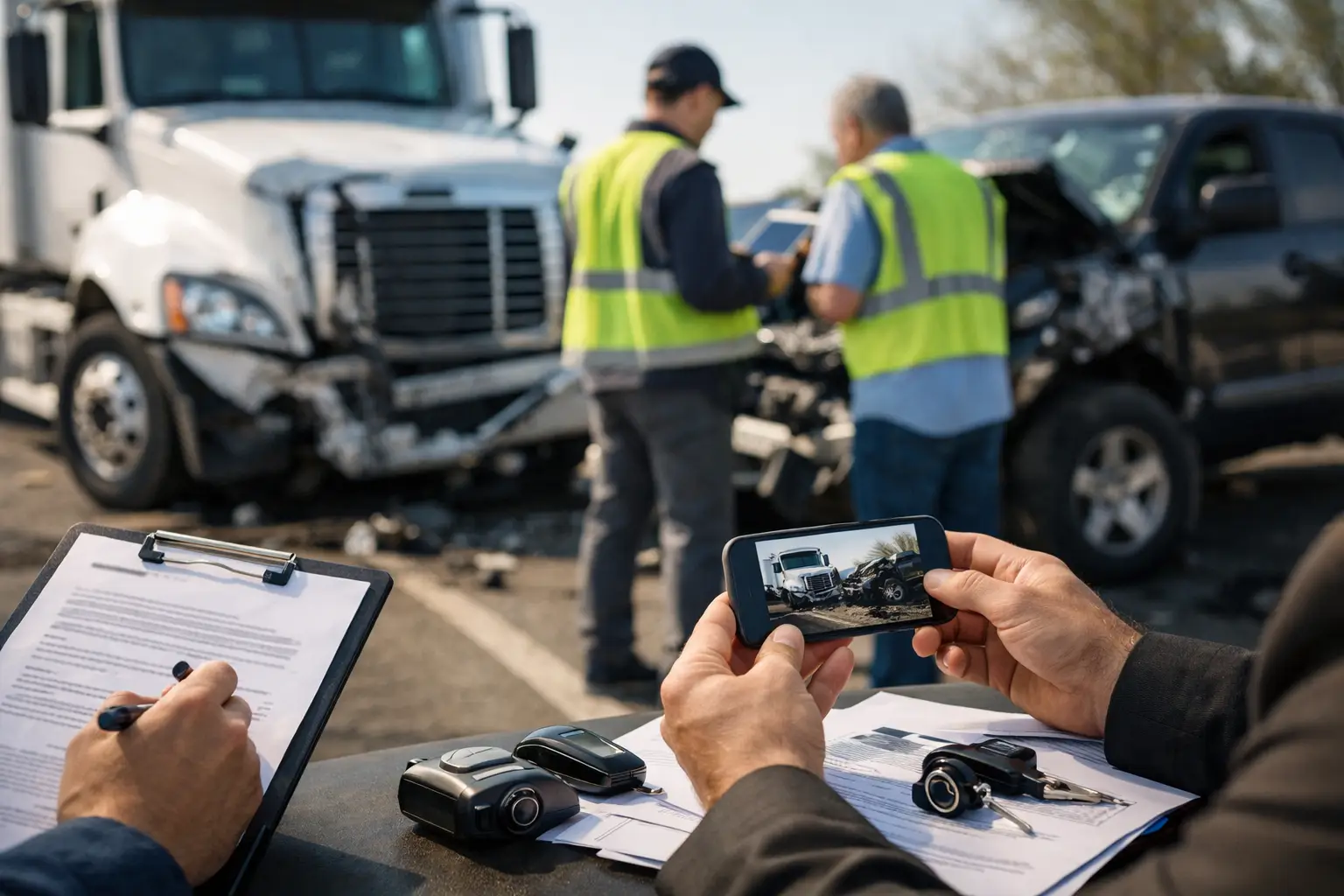
Company records are only part of the picture. Photos of vehicle damage, roadway markings, debris, traffic signals, skid marks, nearby surveillance footage, and witness statements can establish how the collision unfolded. A serious truck crash should be examined before physical evidence disappears and memories fade.
The police report is important, but it is not always the final word. An officer may arrive after the collision and work with limited information. Later evidence, including data from the truck or testimony from witnesses, may clarify whether the driver was distracted, following too closely, failed to yield, crossed the center line, or lost control because of a mechanical issue.
For families in Louisiana, Arkansas, and Mississippi, the legal rules and deadlines can differ by state. Evidence also may cross state lines when a carrier operates nationally. That is another reason to avoid relying solely on what an insurance adjuster says about fault.
Beware of the quick insurance-company narrative
After a serious collision, a trucking insurer may contact you quickly. The adjuster may sound concerned and may ask for a recorded statement, medical authorization, or early settlement agreement. Their job, however, is to protect the company’s financial interests.
An early offer may arrive before the full extent of a brain injury, spinal injury, burn injury, or chronic pain is known. It may not account for future treatment, lost earning ability, home assistance, or the effect the crash has had on the entire family. Accepting a settlement generally ends the claim, even if your condition becomes worse.
You do not have to sort through these pressures alone. Preserve photos, medical paperwork, names of witnesses, and every message or letter you receive. Avoid posting details of the crash or your recovery on social media while the claim is pending. Most of all, get legal advice before signing releases or giving a recorded statement to the trucking company’s insurer.
What an investigation should ask
A meaningful truck-crash investigation is not limited to asking who hit whom. It should examine why the crash happened and whether it could have been prevented. That may involve requesting preservation of the truck and electronic records, reviewing the carrier’s safety practices, consulting qualified accident reconstruction professionals, and identifying every company involved in the trip.
The evidence may show clear company fault. It may show that both drivers share some responsibility. It may also reveal that an independent contractor arrangement is more complicated than the company first suggests. Labels on a contract do not erase the facts of who controlled the work, the equipment, or the safety decisions.
At Downs Law Firm, our family understands that a truck crash can change the course of another family’s life. We work to protect injured people from insurance-company pressure, investigate the facts thoroughly, and prepare serious cases for the courtroom when a fair resolution is not offered.
If you or someone you love was hurt in a commercial truck collision, timely action can help protect evidence and your options. Focus on medical care and your family’s immediate needs, then seek guidance from a lawyer who is prepared to stand beside you and demand answers.